FX Day Job library
Plan a 100-trade test
Structure a trading-method test with fixed rules, consistent records and realistic costs. A testing framework, not a record of verified returns.
4 related guides · Browse the library below
Forex Gemini Code: Build a 100-Trade Test
Assess Forex Gemini Code claims with a transparent 100-trade test covering fixed rules, trading costs, drawdowns and out-of-sample checks.
Read guideA 100-Trade Test for a Forex Course
Plan a 100-trade forex course evaluation with fixed rules, realistic costs, drawdown checks and clear limits on what a small sample can prove.
Read guideA 100-Trade Candlestick Test: Practical Rules
Design a 100-trade candlestick test with fixed entry rules, realistic costs and a holdout sample. Learn what a small result can and cannot show.
Read guideTop Dog Trading: Plan a 100-Trade Demo Test
Evaluate a Top Dog Trading course with a 100-trade demo protocol, clear entry rules, realistic costs and a checklist for spotting weak evidence.
Read guideA test plan, not a historical performance claim
This page does not reproduce an earlier owner's trading results. A fixed 100-trade sample can organise observations, but 100 trades does not prove a durable edge. Dependence between trades, changing conditions and costs affect what the sample can tell you.
Freeze your rules before collecting results
Write the instrument universe, time frame, entry, invalidation, size, costs and review window. Record every qualifying opportunity, including missed and losing setups. Separate in-sample development from an untouched forward sample.
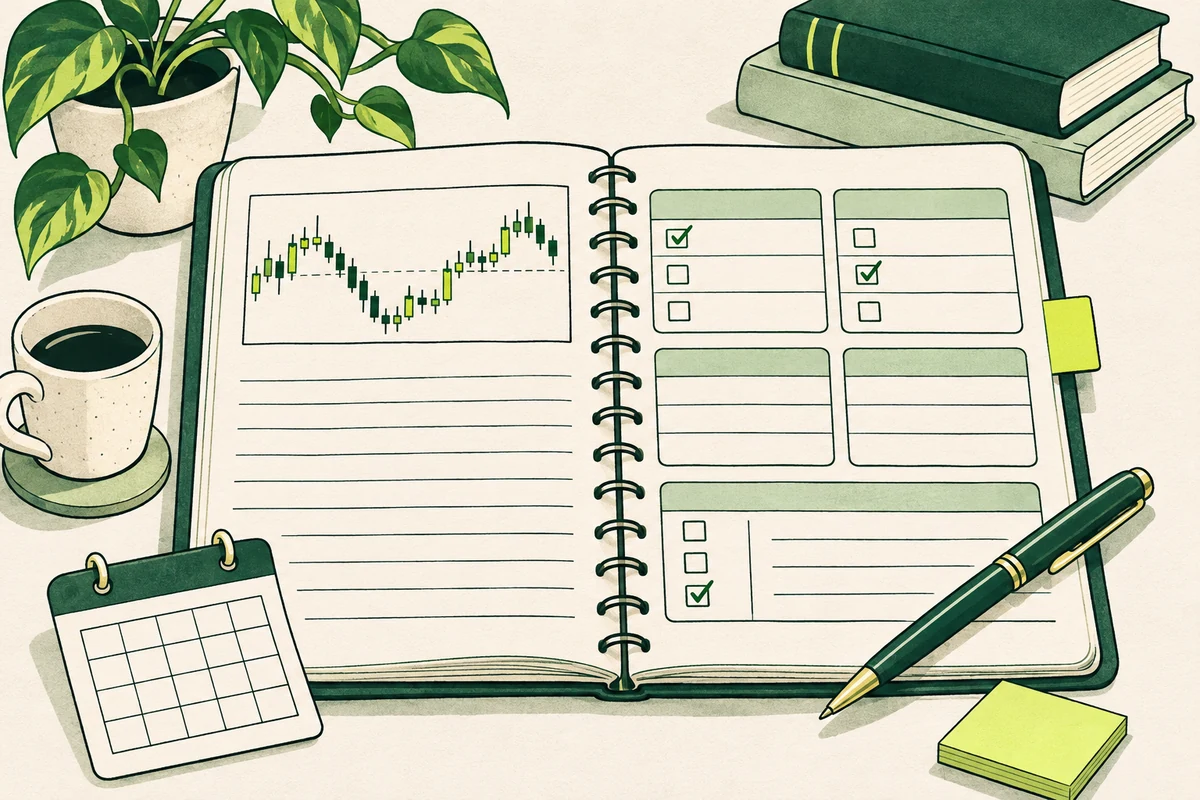
Use the journal to record planned risk and results after costs. Compare average R, drawdown and rule adherence; do not infer a future win rate from a small selected sample.
Choose a subject you need to understand, read its limitations, then record an observation in demo conditions before risking capital.