MetaTrader
MT4 Candlestick Timer: What It Can Tell You
Understand how an MT4 candlestick timer estimates bar time, why countdowns can freeze and how to evaluate a custom indicator safely on a demo account.
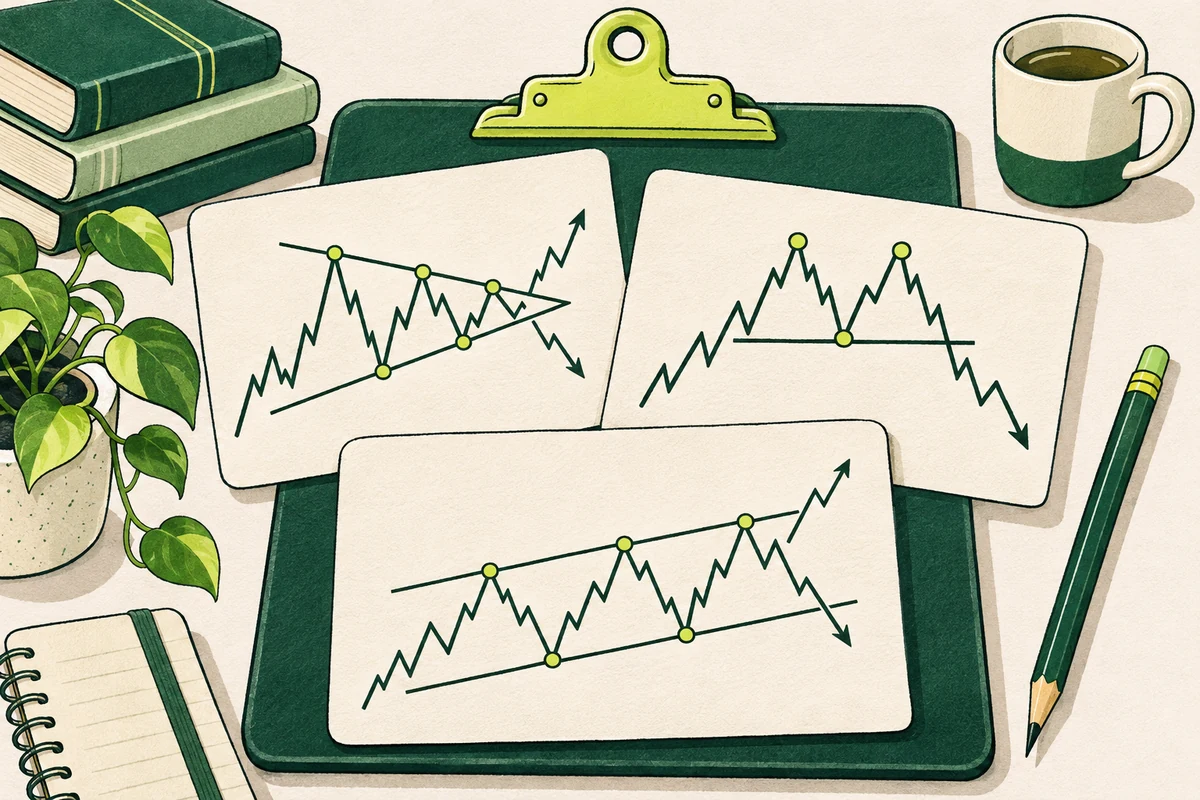
A candlestick timer for MetaTrader 4 estimates how much time remains in the current chart bar. It helps with timing observations, but it does not predict the closing price, improve execution or turn an unfinished candle into a confirmed signal.
Understand what the countdown measures
A basic timer subtracts the current server time from the next expected bar boundary for the selected timeframe. For a fifteen-minute chart, a bar beginning at 10:00 normally ends at 10:15 server time. At 10:12:20, the nominal remaining interval is two minutes and forty seconds.
The calculation is simple, but updating it depends on how the program is written. Some indicators refresh only when a new tick arrives; others use timer events. A displayed countdown can therefore pause during thin trading or a lost connection. It should not be treated as an independent clock or data-feed health certificate.
Match the clock to the chart
Check whether the display uses broker server time, computer time or a specified timezone. Your local clock may show a different hour without the indicator being wrong. Daylight-saving changes and broker session conventions can affect higher-timeframe boundaries.
Use the MT4 introduction to locate the relevant charts and account connection. Compare the indicator against several actual bar transitions, including the final minute of an hour. Daily and weekly bars need particular care because weekend closures and server sessions are not the same as a continuously running wall-clock day.
Evaluate installation without downloading here
This page does not supply a timer file or endorse an untested package. If you choose a custom indicator from an independently verified source, use desktop MT4’s File → Open Data Folder and locate MQL4/Indicators. Place the correct indicator file there, refresh Navigator or restart, then attach it to a demo chart.
MQ4 source and EX4 compiled files are different formats. Source needs compilation before use. Leave DLL imports disabled unless a trusted, understood dependency genuinely requires them. A countdown should not require your brokerage login, a remote-access session or a promise to deposit money with a particular broker.
Test an end-of-bar rule in a numerical example
Imagine a rule that considers a bullish engulfing pattern only after a fifteen-minute candle closes. With forty seconds remaining, the second candle trades at 1.1052, above the prior open of 1.1050. Ten seconds before the boundary it falls to 1.1044 and ultimately closes there.
The earlier picture did not qualify under the closing rule. A timer could alert you to wait, but it could not preserve the earlier shape. The bullish engulfing guide separates pattern definition from an entry assumption. Do not backtest completed candles while entering unfinished ones in practice.
Anticipate connection and display failures
A timer that continues counting during a quote outage may give a false sense that the market is current. A tick-driven timer may show zero until a new quote creates the next bar. Chart switching, template changes and terminal restarts can also expose configuration problems.
Keep the broker connection status and quote timestamps visible. If an alert or sound matters to your workflow, test it explicitly on demo rather than assume it is included. Desktop custom indicators are not simply installable into MT4 Android; the Android guide explains the platform boundary. Product claims about mobile compatibility need separate verification.
Decide whether the timer improves your process
Use a focused checklist: verify the timeframe, server-time convention, refresh mechanism, last-quote timestamp and behavior around a bar change. Compare the chart before and after reconnecting. Confirm that the countdown remains legible without covering order prices or important chart labels.
Then track whether it reduces a specific error, such as evaluating signals too early. A timer is an interface aid, not evidence of positive expectancy. If it encourages frantic last-second entries, remove it and use scheduled chart reviews instead. Keep all trial installations on demo, and remember that leverage, slippage and counterparty risk remain unchanged by a more convenient clock.
Test alerts without creating last-second pressure
If a chosen timer claims to provide advance alerts, verify the exact lead time and whether the sound or message depends on the terminal remaining active. This page does not confirm that any particular timer includes alerts.
Use the reminder to prepare an observation, not to race an order into the final second. A rule based on the completed candle still requires the closing condition to be checked afterward. Record whether the tool reduces premature decisions or instead increases urgency; convenience should be judged by the specific error it addresses.
Put this guide in context
Use the metatrader library to place this topic in a wider learning plan. Compare it with MT4 Forex Brokers: Five Checks Before Choosing before deciding what to practise.
For the next part of your review, read MetaTrader 4 Android: Setup and Safety Checks. Keep your assumptions in a trading journal; related explanations are not proof that a setup will work.
To explore the neighbouring questions, compare MetaTrader 4: A Safe Beginner Workflow and VMA Indicator: Define It Before You Trade and Tick Charts in MT4: What You Can Build. Use these as learning references, not as confirmation that any individual trade is justified.
Sources and further checking
Primary sources support factual checking; they do not endorse this publication. Examples are educational, not trade recommendations.