Trading methods
Forex Trading Videos: A Learning Checklist
Choose forex trading videos that teach reproducible mechanics, disclose risk and show complete examples rather than selected winning trades.
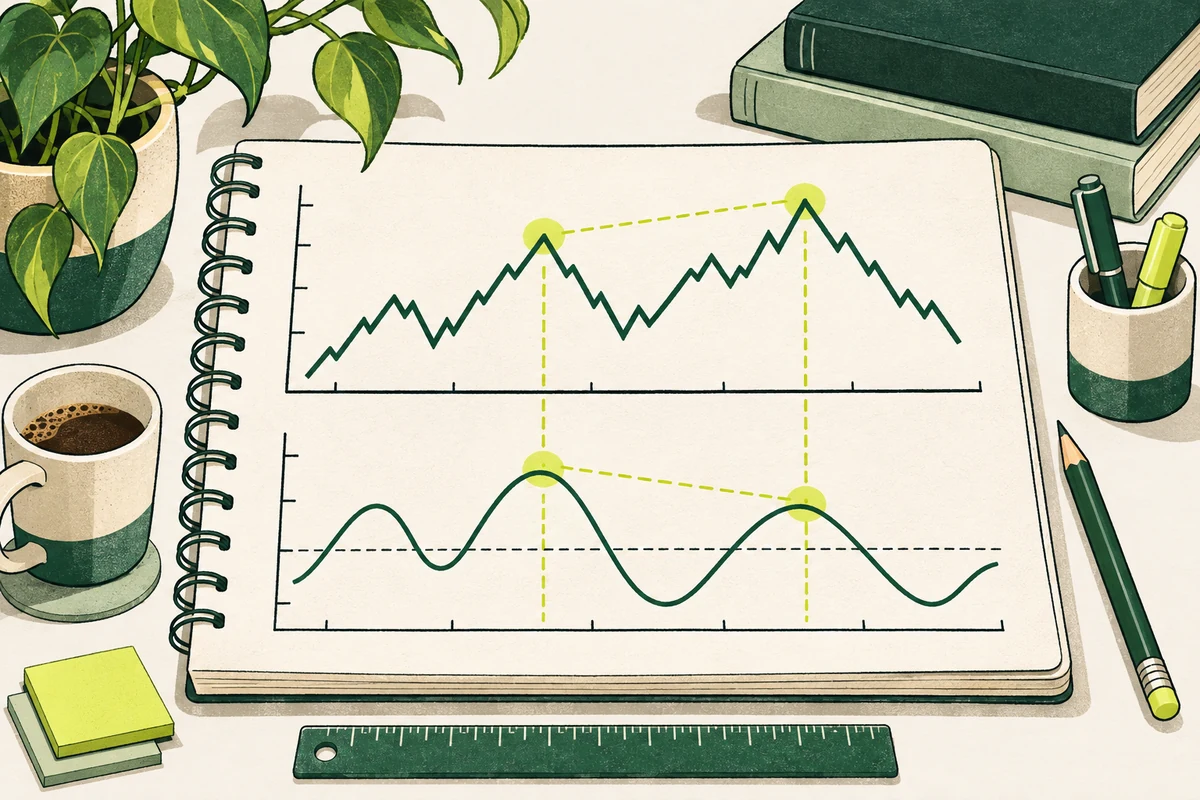
Useful forex trading videos explain a specific skill with reproducible steps and visible risk, rather than selling certainty from selected winners. Treat a recorded trade as an illustration unless its timing, costs and complete surrounding record can be independently assessed.
Choose one learning objective per viewing
Decide whether you need to understand quote conventions, order entry, position sizing, chart reading or strategy evaluation. Watching a broad stream of market commentary often creates familiarity without usable competence. A beginner session might focus only on placing and canceling a demo limit order. Afterward, reproduce the process without replaying the clip. Start with MT4 platform basics if the presenter assumes knowledge of its panels and menus. A focused objective makes it possible to judge whether the video actually taught something instead of merely sounding persuasive.
Write a short question before pressing play and answer it afterward using an actual demo exercise. If the clip never answers that question, mark it incomplete rather than treating its length, confidence or production quality as evidence of educational depth.
Check the presenter and commercial context
Look for the publisher's identity, publication date, conflicts of interest and whether brokerage or course links generate compensation. Expensive production, a luxury background or large follower counts do not verify expertise. A video can teach a correct order-entry procedure while making unsupported claims about returns elsewhere. Separate those judgments. If the presenter offers regulated financial services, investigate the actual entity and permissions in the relevant jurisdiction; NFA BASIC is a U.S. resource. Registration is not a performance endorsement, and a course-only publisher may have a different regulatory status from a dealer.
Demand information visible before the outcome
A good chart demonstration shows the symbol, timeframe, clock or bar time, entry condition, invalidation and proposed size before revealing the next candles. Hindsight annotations can illustrate a definition but cannot prove that a real-time decision was available. Pause a replay before the reveal and write your own decision. The price-action guide helps turn narration into measurable observations. If the host continually moves support zones or redraws pivots after outcomes, treat the clip as discretionary commentary, not a reproducible test of the originally stated method.
Recalculate a position-sizing example
Suppose a presenter describes a $10,000 demo account, a $50 planned price-risk budget and a 25-pip EUR/USD stop. For USD account currency, 10,000 units have approximately $1 per pip, so 20,000 units imply about $50 of price risk before costs. If the shown ticket uses 200,000 units instead, the risk is roughly $500, not $50. Verify contract size and quote conversion rather than copying a lot number. The pip mechanics page provides the underlying units. A small-looking decimal in a lot field can still represent substantial exposure.
Watch for missing losses and hidden costs
A playlist of profitable trades may omit losing sessions, deleted uploads or signals that never triggered. Ask whether every eligible decision appears, whether statements reconcile deposits and withdrawals and whether spreads, commissions and swap are deducted. A simulated result should be labeled simulated. No video should imply that a stop always fills at its exact price or that a break-even tool eliminates all loss. Compare net average wins and losses with the reward-to-risk framework. An attractive target line says nothing about how often the market reaches it.
Prefer primary documentation for platform mechanics
For menu paths, account security and indicator formulas, consult the platform's official help alongside a video. Interfaces and broker offerings change, so an old clip may point to a removed control or a third-party download that is no longer trustworthy. Never disable security settings, install a remote-access utility or share credentials simply to follow a lesson. This site provides educational reading, not a hosted video course or software bundle. A presenter demonstrating a custom tool must identify its version and permissions; its appearance on a screen does not establish safety or current availability.
Finish with a teach-back checklist
After watching, explain the objective in your own words, repeat the mechanics on demo and record anything that remained ambiguous. Save the source and date, check the arithmetic and write one way the demonstrated idea can fail. If you cannot specify entry timing or invalidation without the narrator, you have not yet obtained a testable method. Keep notes in a learning journal rather than collecting more videos indefinitely. Reject urgency, guaranteed earnings and requests to fund an account immediately. Choosing not to copy a demonstration is a successful learning outcome.
Put this guide in context
Use the trading methods library to place this topic in a wider learning plan. Compare it with Free Day Trading Course: A Learning Checklist before deciding what to practise.
For the next part of your review, read Forex Books and Ebooks: A Reading Checklist. Keep your assumptions in a trading journal; related explanations are not proof that a setup will work.
To explore the neighbouring questions, compare Why Develop a Trading Plan? and Bearish RSI Divergence: Rules and Limits. Use these as learning references, not as confirmation that any individual trade is justified.
Sources and further checking
- MetaTrader 4 official platform help
- CFTC: Eight Things You Should Know Before Trading Forex
- NFA BASIC registration and disciplinary search
Primary sources support factual checking; they do not endorse this publication. Examples are educational, not trade recommendations.