Trading methods
US30 Trading: Contracts, Costs and Risk
Understand what US30 usually represents, check index CFD contract specifications and calculate point-value risk before studying any trading strategy.
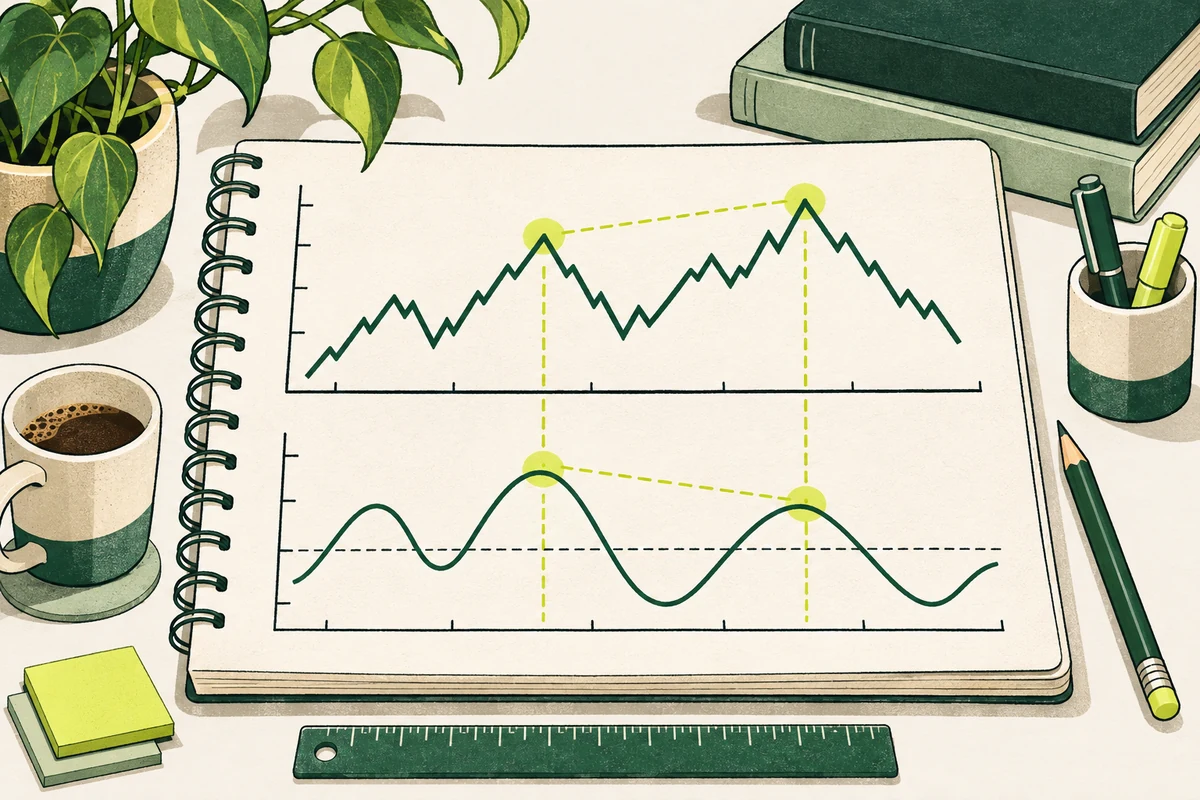
US30 usually labels a broker’s derivative linked to the Dow Jones Industrial Average, not a forex currency pair. Before studying “US30 forex strategies,” identify the exact product, legal availability, point value, trading hours and financing terms offered by the account entity.
Identify the actual index-linked product
The Dow Jones Industrial Average is an index, not something bought directly like a share. Brokers may offer cash-index CFDs, futures-derived contracts or other arrangements under similar symbols. Exchange-traded index futures are separate contracts with their own specifications. Availability and legality depend on jurisdiction and the account arrangement.
Read the symbol specification and customer agreement rather than assuming US30 means the same instrument everywhere. The stock-versus-forex comparison explains why product structure matters before strategy. A broker’s currency-trading platform can display an index derivative without turning that derivative into spot forex.
Verify point value, minimum size and margin
Find the money gained or lost per index point for the exact size unit offered. “One lot” is not a universal dollar amount across brokers or index products. Confirm minimum size, size increment, contract currency, margin calculation and any differences between cash and futures-based symbols.
Also check expiry, rollover and adjustment policies where relevant. Cash-index products may have financing or dividend-related adjustments under broker terms; futures-derived products can behave differently. Do not infer any specific feature from the US30 name alone. If the platform specification and published terms appear inconsistent, resolve the discrepancy before placing even a small funded order.
Work through point-risk arithmetic
Suppose a hypothetical contract moves $1 per index point for one specified size unit. An entry at 40,000 with a stop at 39,900 has 100 points of price risk, or $100 for that unit. If a permitted tenth-unit size moves $0.10 per point, the same distance represents $10 before costs.
Those values are illustrative, not a broker specification. A 5-point spread would add $5 for the full unit under the assumed value, and slippage can add more. The money management guide explains how to size from an affordable monetary loss rather than treating the large-looking index number as the relevant risk measure.
Study the cash session and overnight behavior
The underlying US equity cash session has defined exchange hours, while a derivative may quote for a longer period under its own schedule. Liquidity, spreads and price behavior can differ near the cash open, during overnight hours and around maintenance breaks. US holidays and daylight-saving transitions also matter.
Record the broker’s server time and the relevant US local time for each observation. A session-specific rule must use a consistent calendar. Gaps can occur between quoted periods, and a stop does not guarantee a fill at its trigger price. Do not assume a long displayed trading schedule means uninterrupted liquidity at normal costs.
Convert a strategy slogan into a testable rule
“Trade the opening breakout” is incomplete without a range definition, opening window, trigger, stop, exit and cost model. A pullback or trend-following hypothesis likewise needs precise criteria. Define whether calculations use the underlying index, the broker derivative or a futures series; mixing them can introduce unavailable fill prices.
Review support and resistance confirmation for consistent zone definitions. Strong trends, false breaks and headline shocks can defeat both fade and breakout ideas. A chart projection should never be presented as a guaranteed target, and an attractive historical screenshot does not show whether the contract’s actual spread made the trade viable.
Use an index-specific practice checklist
Verify legal availability, entity authorization, contract type, point value, minimum increment, trading schedule, adjustments and total costs. Check the symbol again after switching accounts; demo and live specifications or product lists may differ. Keep any simulated study on the exact contract assumptions you intend to evaluate.
Do not use currency pip shortcuts for an index without checking the specification, and do not choose higher leverage to compensate for a small balance. This page offers contract literacy, not a claim that a US30 strategy is profitable. Leveraged index derivatives can produce rapid losses, including execution beyond a planned stop during gaps or stressed conditions.
Do not confuse the price-weighted Dow index with a broad equal-weighted picture of US businesses. Its composition and calculation are defined by the index provider, while your broker’s derivative adds its own terms. An analysis of the underlying index and a simulation on a broker symbol should identify that distinction. Verify official index information separately from contract-specific costs and avoid using one source as authority for both.
Put this guide in context
Use the trading methods library to place this topic in a wider learning plan. Compare it with Bullish Market Strategies: A Risk-First Guide before deciding what to practise.
For the next part of your review, read Trading Quiet Forex Markets: Costs and Risk. Keep your assumptions in a trading journal; related explanations are not proof that a setup will work.
To explore the neighbouring questions, compare Pivot Point Strategies: Formulas and Risk and Trading Forex Online: A Risk-First Start. Use these as learning references, not as confirmation that any individual trade is justified.
Sources and further checking
- S&P Dow Jones Indices: Dow Jones Industrial Average
- CFTC: Eight Things You Should Know Before Trading Forex
- NFA BASIC: registration and disciplinary records
Primary sources support factual checking; they do not endorse this publication. Examples are educational, not trade recommendations.