Trading methods
Trading Quiet Forex Markets: Costs and Risk
Understand quiet forex conditions, spread-to-range costs, false breaks and release risk, with a checklist for deciding when to stand aside.
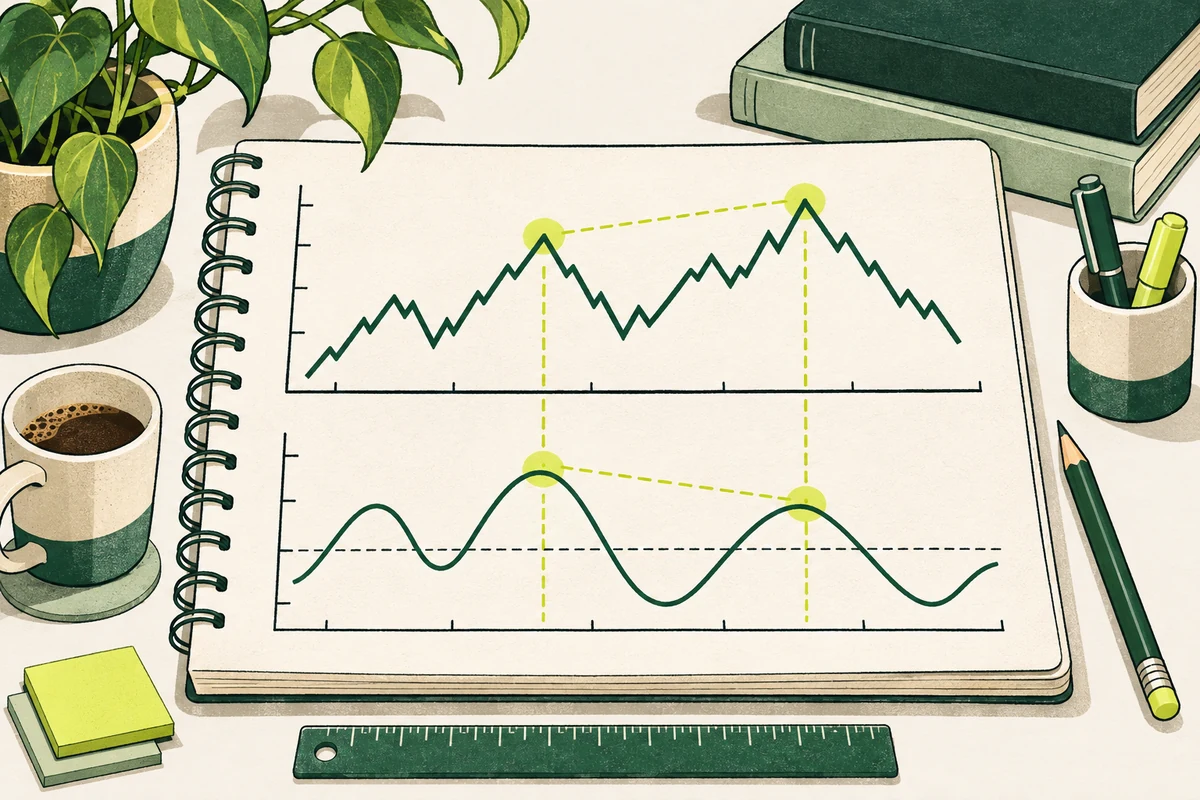
Quiet forex markets show limited recent movement, but low activity does not automatically mean low risk or an easy range trade. Compare spread with the available range, check the session and upcoming releases, and allow for a sudden shift in liquidity or volatility.
Define quiet with a stated measurement
Low range, low realized volatility and few quote updates are related but different observations. Choose a measure such as the average high-low range of the last twelve completed five-minute bars, then compare it with a relevant historical window. Do not infer market-wide trading volume from a single retail feed's tick count. The tick-chart guide explains the distinction between quote updates and centralized transactions. A stable-looking price can reflect balanced trading, sparse quotes or a temporary pause before news; the visual result alone does not identify the cause.
Measure friction relative to the range
Suppose a hypothetical range spans eight pips and the round-trip friction estimate is 1.6 pips. Friction consumes 20% of that full width before accounting for imperfect entry and exit. If a method captures only four pips gross, the same friction consumes 40% of its intended gain. A high apparent hit rate may therefore coexist with negative net expectancy. Use the reward-to-risk guide to evaluate actual average outcomes rather than assuming every touch of the boundary offers the whole range. Narrow charts can make transaction costs look visually insignificant even when economically dominant.
Distinguish a quiet session from a temporary pause
Regional participation varies, holidays can reduce liquidity and a market can become inactive just before a scheduled release. Check the time zone and current calendar rather than attributing every small candle to a predictable session behavior. Forex opening times provides the scheduling framework. Spreads may widen when quoting is thin, and the next update can move sharply through a drawn level. Low recent volatility is a backward-looking measurement, not a promise that the next order will experience small slippage or that a stop distance will be respected exactly.
Write a range hypothesis without assuming reversal
If studying a range fade, define its construction, minimum width, touch tolerance, entry order and invalidation. A limit order can fill just as a genuine breakout begins, creating adverse selection. For example, a candidate resistance zone from 1.1000 to 1.1008 does not guarantee that a sell at its lower edge is safe. Map support and resistance before the event and measure executable Bid and Ask quotes. A midpoint chart touching a boundary is not sufficient evidence that your exact order would have filled or exited favorably.
Treat breakout anticipation as a separate experiment
A prolonged narrow range sometimes precedes expansion, but it does not tell you the direction, timing or whether the first break will persist. Define whether a breakout requires an intrabar trade beyond the boundary or a completed close, and specify pending-order expiration. A price-action method that fades failed breaks is different from one that buys the first break; do not switch between them retrospectively. Stop orders can fill beyond their trigger in fast conditions, and placing orders on both sides introduces cancellation and duplicate-exposure risks that must be modeled explicitly.
Use a prewritten inactivity rule
Possible research safeguards include a maximum spread-to-range ratio, a no-entry window around releases or standing aside when the measured range falls below a fixed threshold. These are candidate rules to evaluate, not universally optimal settings. Log excluded periods so you can later inspect whether the filter genuinely improved net outcomes. The journal guide helps retain this evidence. Boredom is not a valid reason to relax the threshold. A day with no trade can be the intended output of a well-specified method rather than a missed productivity target.
Track time spent watching excluded conditions without trading. If a supposedly simple quiet-market method repeatedly demands hours of attention for few eligible decisions, that opportunity cost belongs in the suitability assessment even when no order is placed.
Check conditions before any demo entry
Confirm the range measurement uses completed bars, the feed is connected, spreads are current and the session or holiday context is understood. Identify the next scheduled release, invalidation, order expiry and expected cost in account currency. Review correlated exposure and stop if the possible loss cannot be reconciled with your budget. Part-time traders should also verify that the required monitoring fits available hours. A quiet screen can change quickly; neither a narrow range nor a high historical range-fade win rate makes leveraged forex safe or creates an obligation to trade.
Put this guide in context
Use the trading methods library to place this topic in a wider learning plan. Compare it with US30 Trading: Contracts, Costs and Risk before deciding what to practise.
For the next part of your review, read Is Forex Trading Real? Markets, Risk and Scams. Keep your assumptions in a trading journal; related explanations are not proof that a setup will work.
To explore the neighbouring questions, compare Bullish Market Strategies: A Risk-First Guide and Trading Forex Online: A Risk-First Start and Correlating Forex Pairs: Exposure and Risk and Is Forex Trading Gambling? Risk and Behavior and Forex Scalping Methods: Costs and Failure Modes. Use these as learning references, not as confirmation that any individual trade is justified.
Sources and further checking
Primary sources support factual checking; they do not endorse this publication. Examples are educational, not trade recommendations.