Trading methods
Currency Carry Trade: Yield, Funding and Risk
Understand currency carry trades, retail rollover and exchange-rate risk. Work through a yield example and learn why a positive swap is not free income.
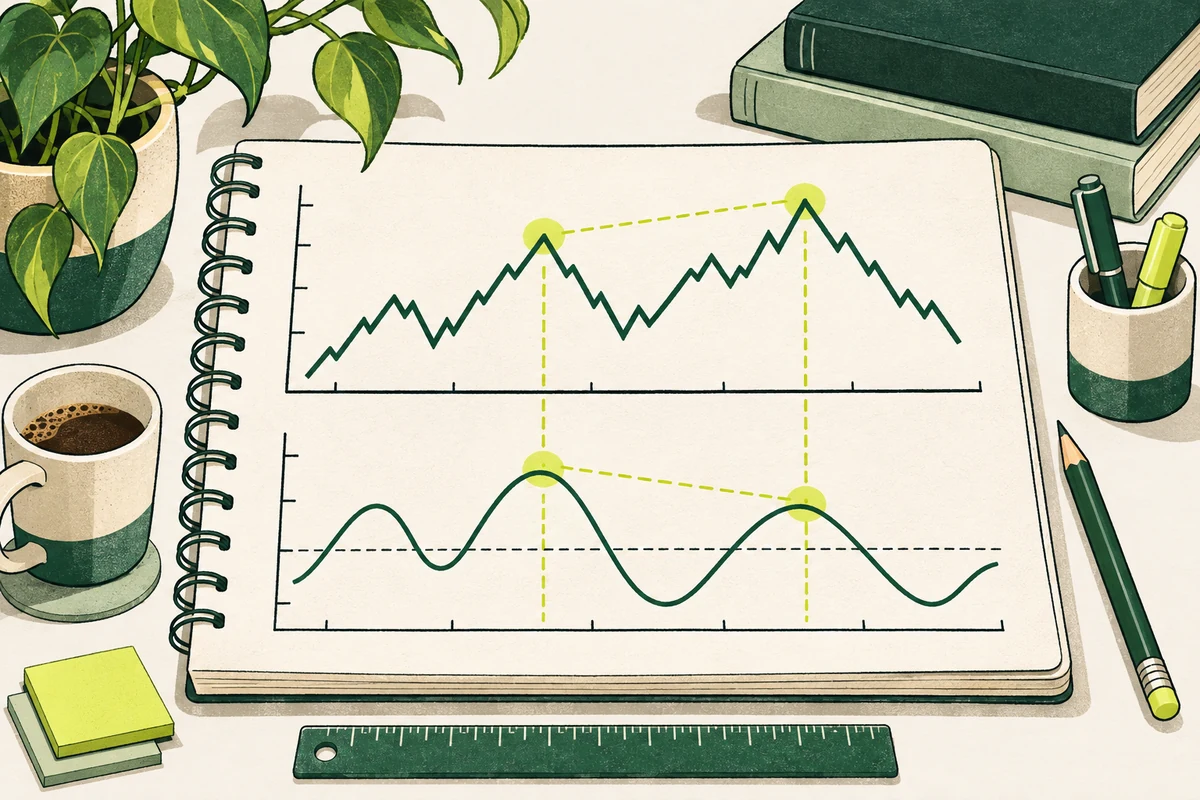
A currency carry trade seeks to earn a funding or interest-rate differential while holding exchange-rate exposure. It can lose far more from currency movement than it earns in carry, and a retail broker’s rollover is not simply the difference between two central-bank policy rates.
Separate the economic idea from the retail contract
The broad idea is to fund exposure in a lower-yielding currency and hold a higher-yielding one. Institutional implementations may use borrowing, deposits, forwards or other instruments. A retail rolling forex position instead follows the broker’s contract and financing schedule.
Do not assume buying the currency with the higher published policy rate guarantees a credit. Broker markups, market funding conditions, holidays and the specific product affect charges. Read the current swap or financing terms for both long and short positions, including how they are quoted and converted to account currency.
Distinguish policy rates from tradable forward pricing
Central-bank rates are useful context, but they are not a retail deposit rate or a guaranteed funding rate. Currency forward prices reflect interest differentials and market conditions; a favorable interest rate is not a separate gift without a pricing relationship.
Forward points and expected spot appreciation are different concepts. If you cannot explain the actual contract’s cash flows, do not use a headline rate spread to estimate income. The forex legitimacy guide helps distinguish products and counterparties before any strategy calculation is attempted.
Work through a simplified annual example
Suppose a hypothetical unleveraged $10,000-equivalent exposure earns an illustrative net carry of 3% over a year if the rate and notional remain constant. That is about $300 before tax and any omitted expenses. A 5% adverse currency move is approximately $500, overwhelming that carry and leaving an approximate $200 loss.
The example deliberately simplifies compounding, rate changes and currency conversion. It is not a quote for any pair. If the exposure were supported by only $1,000 of equity, the same approximate $500 currency loss would represent 50% of that equity before closeout rules and other effects.
Check how rollover is actually applied
Inspect whether the broker quotes financing in points, cash per lot or another unit. Determine the rollover cutoff and how weekends and settlement holidays affect the number of charged days. Multi-day adjustments do not necessarily occur on the same weekday for every product or broker.
Keep screenshots of the terms when opening a research position and compare them with the actual account history. The MT4 guide explains symbol specifications, but the broker’s agreement governs the account. A displayed positive swap today may change, so a long holding period does not lock in the initial rate.
Understand why carry trades can unwind sharply
High-yielding currencies can weaken when investors reduce risk, funding becomes scarce or policy expectations change. Many positions may be closed in the same direction at once. The resulting exchange-rate move can erase months of accumulated financing.
Historical calm can encourage leverage just before a volatility increase. Do not infer safety from a long run of small credits. A stop order may reduce exposure under normal conditions but cannot guarantee a fill through a gap. Diversifying among several similarly risk-sensitive currencies may provide less protection than their different names suggest.
Evaluate the full holding-period result
Record spot-price change, financing, commission and conversion effects separately. A position receiving daily credits can still have negative total return. Compare marked-to-market equity rather than report income from credits while leaving a larger unrealized loss unmentioned.
A trading spreadsheet should reconcile those components to the statement. The forex income discussion explains why irregular speculative outcomes should not be treated as dependable monthly pay. Do not budget household expenses from an assumed rollover stream or increase leverage to turn a small rate difference into a desired salary.
A carry-specific research checklist
Before testing, identify the exact instrument, funding terms, quote units, rollover schedule, rate-change provisions and exchange-rate exposure. Model an adverse currency move larger than the expected carry and ask whether the resulting loss is affordable without borrowing or essential savings.
Use demo calculations first and understand that a simulator may not reproduce every financing charge. Verify the counterparty independently and keep a current record of contract terms. The carry trade is an economic strategy, not free yield, and no historical rate differential guarantees that the next holding period will be profitable.
Put this guide in context
Use the trading methods library to place this topic in a wider learning plan. Compare it with Bullish Market Strategies: A Risk-First Guide before deciding what to practise.
For the next part of your review, read Trading Quiet Forex Markets: Costs and Risk. Keep your assumptions in a trading journal; related explanations are not proof that a setup will work.
To explore the neighbouring questions, compare Trading Forex Online: A Risk-First Start and US30 Trading: Contracts, Costs and Risk. Use these as learning references, not as confirmation that any individual trade is justified.
Sources and further checking
- CFTC: Eight things to know before trading forex
- NFA BASIC: Research firms and registration
- MetaTrader 4 official desktop help
- BIS Quarterly Review: Carry off, carry on
Primary sources support factual checking; they do not endorse this publication. Examples are educational, not trade recommendations.